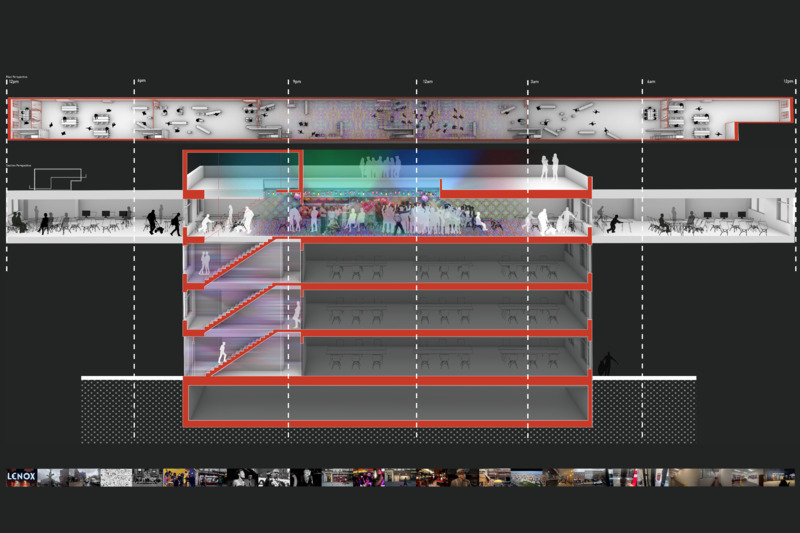
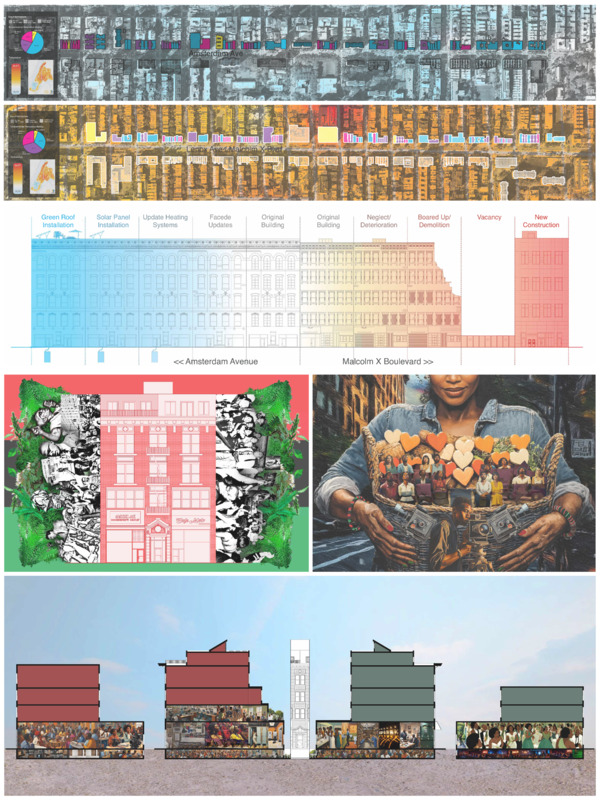
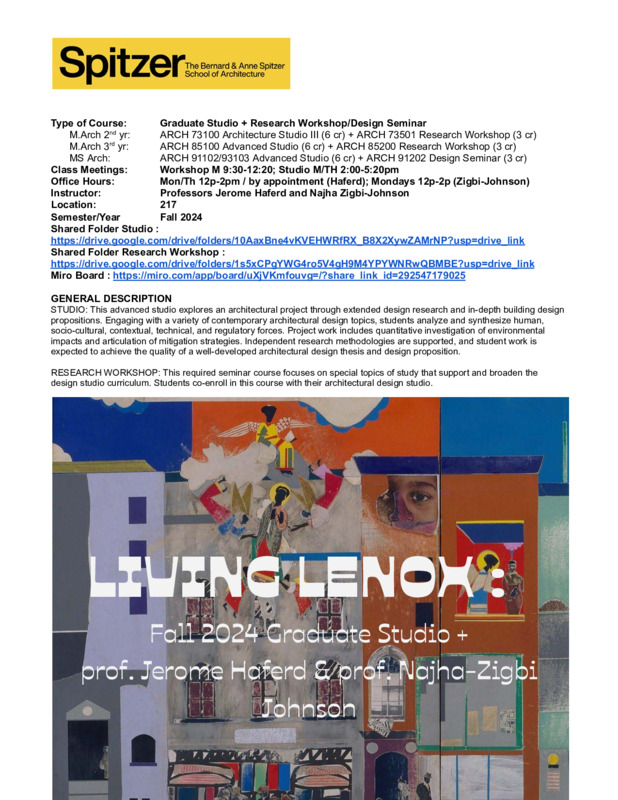
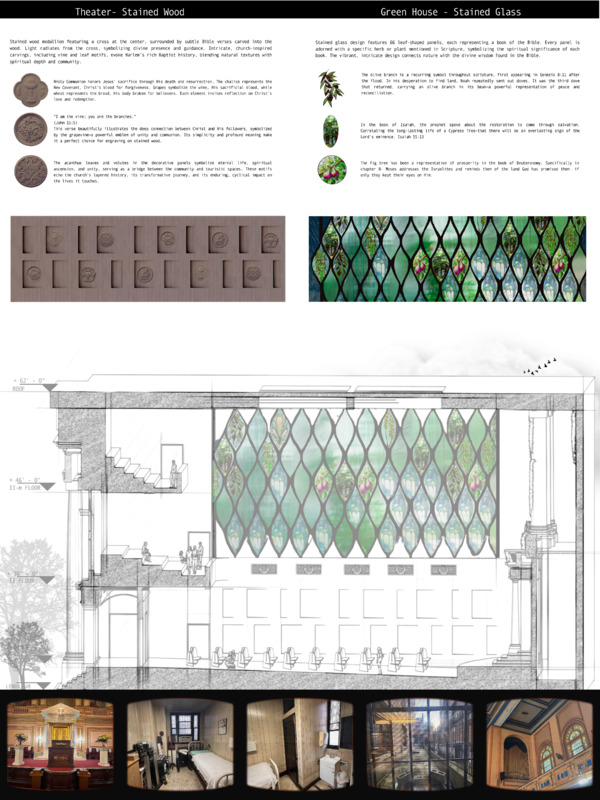
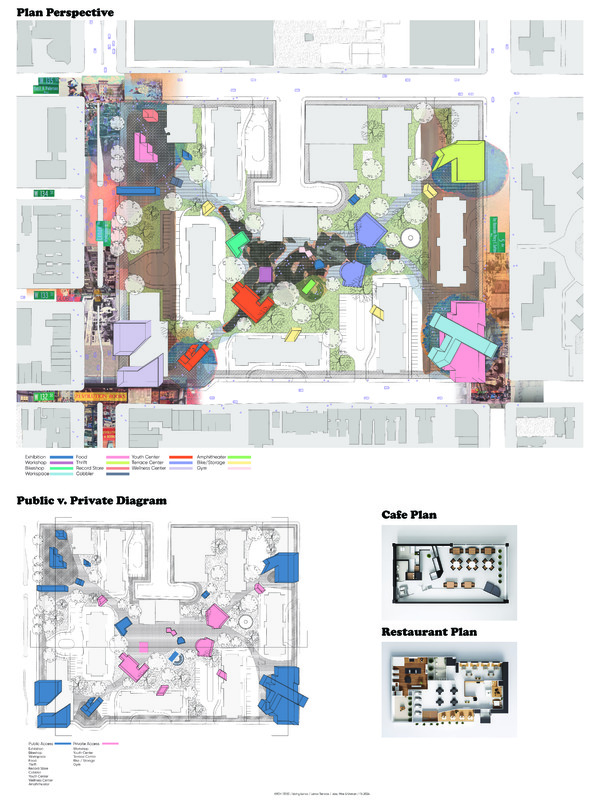
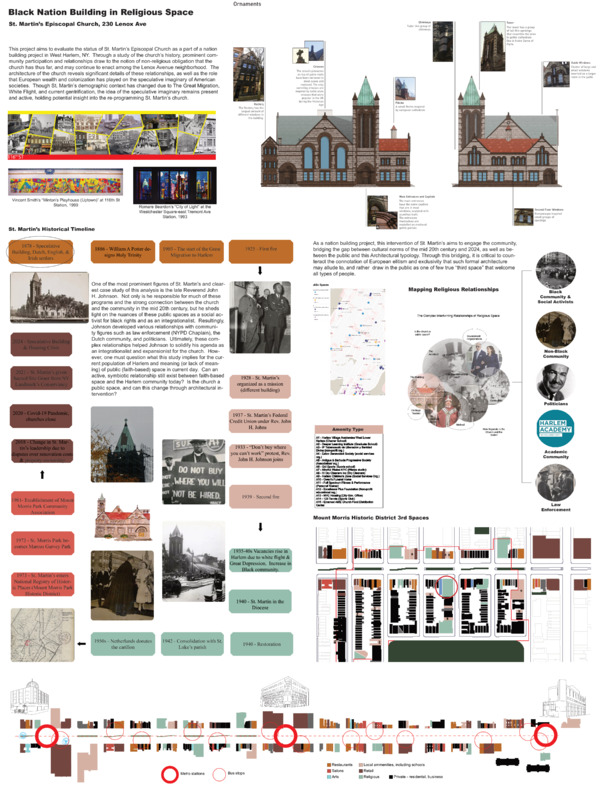
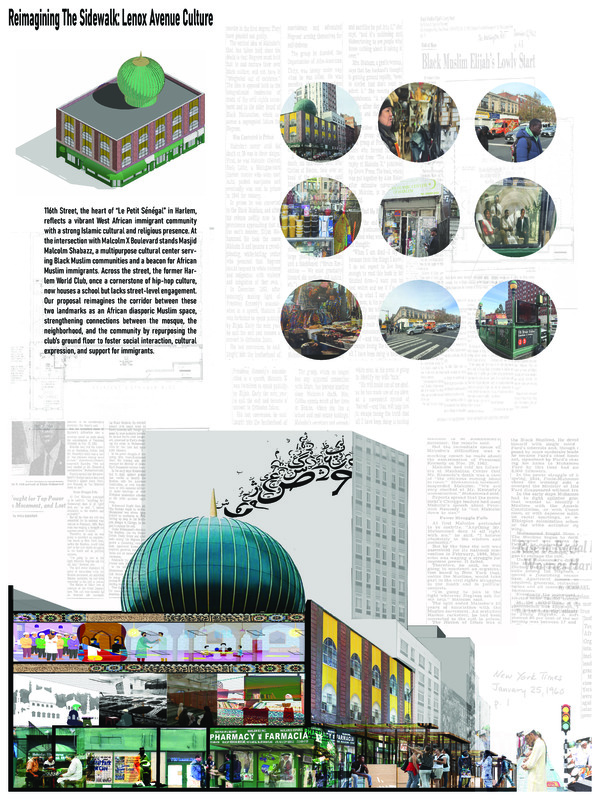
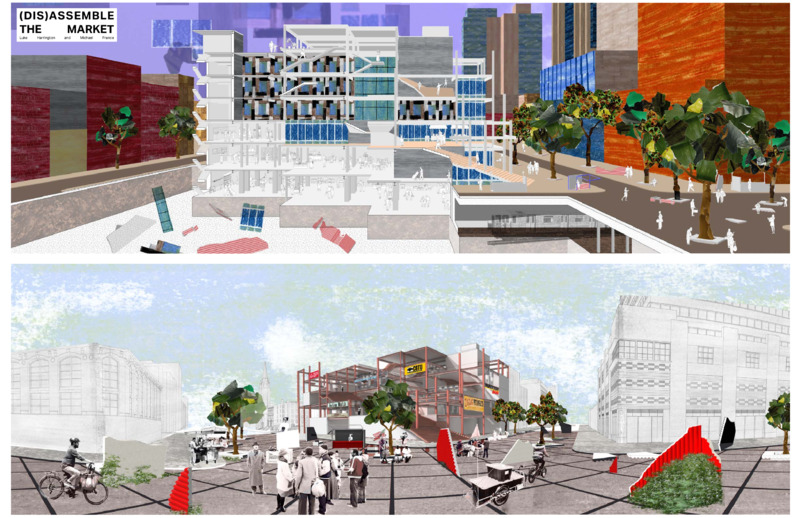
Fall 2024 Place, Memory & Culture Incubator studio, taught by Jerome Haferd.
Contributor
Zigbi-Johnson, Najha
Temporal Coverage
September 2024 - December 2024
Abstract
This advanced studio explores an architectural project through extended design research and in-depth building design propositions. Engaging with a variety of contemporary architectural design topics, students analyze and synthesize human, socio-cultural, contextual, technical, and regulatory forces. Project work includes quantitative investigation of environmental impacts and articulation of mitigation strategies. Independent research methodologies are supported, and student work is expected to achieve the quality of a well developed architectural design thesis and design proposition.
Segment begins at 0:13:15 and continues until 0:18:50.
Urban U is a CUNY-TV magazine show about CUNY students, faculty, alumni, and programs. The stories highlight the quality and rewards of a CUNY education, one that enables people to achieve great things. As the world’s largest urban university with 24 campuses spread across New York City’s five boroughs, CUNY is as rich and diverse as the City itself. With a history of over 100 years, the university scope of Urban U stories is immense.
Urban U will inform, inspire and engage viewers by reporting on the relevant happenings within the CUNY system, but also by exploring the achievements of its body of students, faculty and alumni.
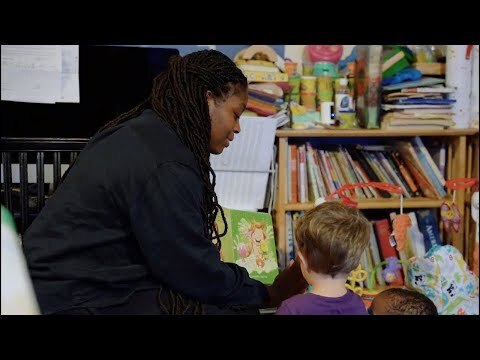
In this episode, Urban U checks out the "Generative Histories" Exhibit at Spitzer School of Architecture, showcasing the work of the Place, Memory & Culture Incubator
Samantha Fox, M. Arch student at Spitzer School of Architecture, interviews Kazembe Balagun, Executive Director of Maysles Documentary Center, on November 8, 2024.
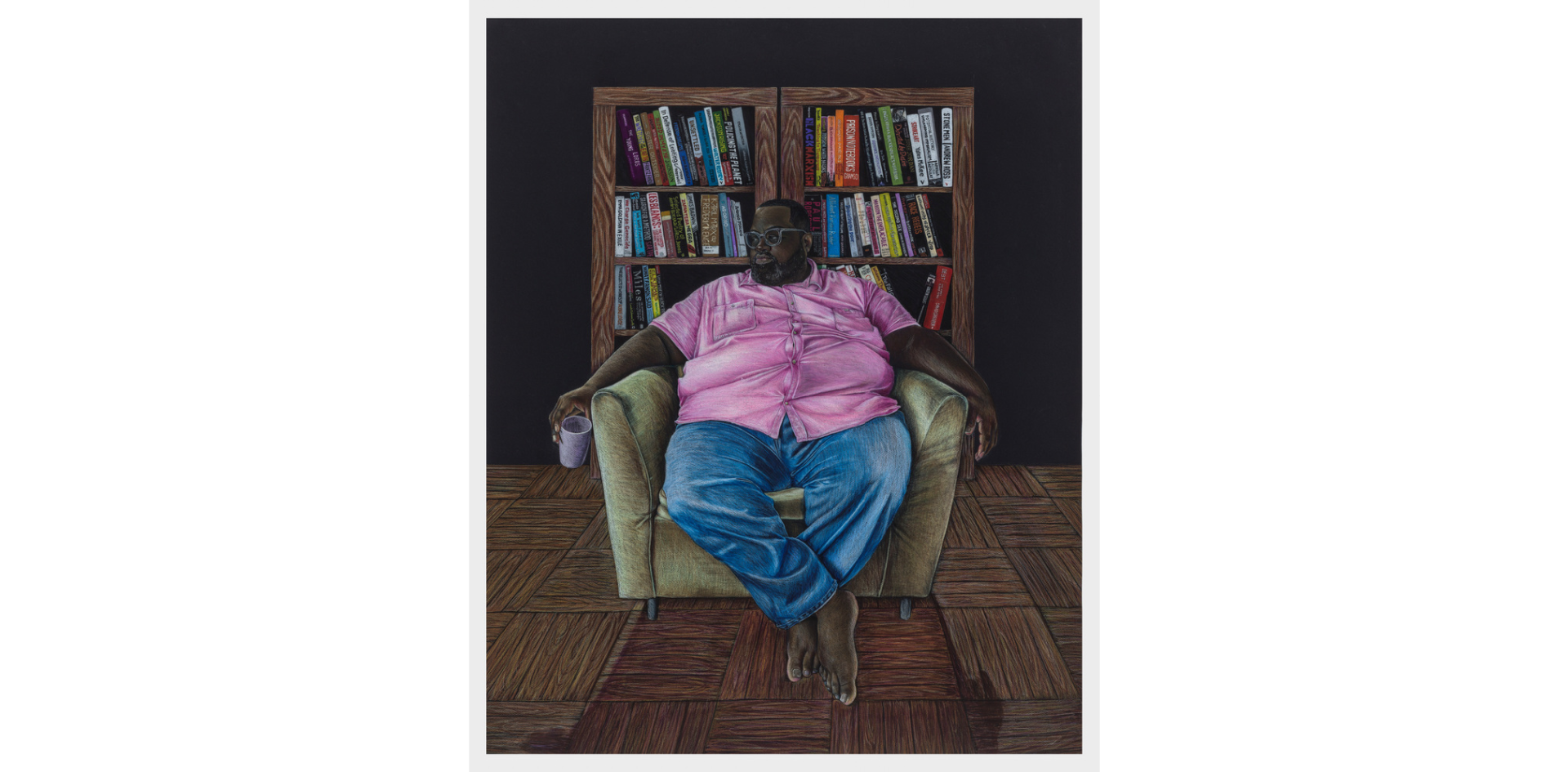
The image paired with this interview is a 2022 illustration (color pencil on paper) titled "Kazembe Balagun, Black Militant Study" by Shellyne Rodriguez. Shellyne Rodriguez is a Bronx-based artist, educator, historian, writer, and community organizer who works in a variety of media, including drawing, painting, collage, and sculpture. Rodriguez stewards the histories and stories of people that have shaped her lived experience, describing her practice as “the depiction and archiving of spaces and subjects engaged in strategies of survival against erasure and subjugation.” Through her multidisciplinary practice, Rodriguez documents the ways in which the diverse social fabric of the South Bronx is rewoven as the people and cultures coexist. Rodriguez utilizes language as well as cultural and sociopolitical references to create unified portraits of individuals from various communities formed in what she describes as the “periphery of empire.” Engaging with the legacy of the Ashcan School, who bore witness to the rise of the modern metropolis and depicted how the poor and working class in New York enclaves were transformed by this, Rodriguez views figures such as Alice Neel, Jane Dickson, and Martin Wong as an extension of this tradition and situates her practice alongside them.
Najha Zigbi-Johnson is a writer, educator, and cultural organizer. Her Harlem-based practice sits at intersections of the built environment, contemporary Black art, and social movement history. She is the editor of "Mapping Malcolm," a publication that brings together artists, transnational community leaders, and scholars who explore the politics of Black space-making.
Kazembe Balagun is a writer, cultural critic, and outreach coordinator at the Maysles Documentary Center in Harlem. His work focuses on the intersection of Black radical thought, cinema, and community organizing.
kennedy is a preservation architect, published writer, and guest speaker. She is the founder of wrkSHäp I kiloWatt, a historic preservation, and owner's representation. It is home to Black in Historic Preservation, Beyond Integrity in (X), and (un) Redact the Facts. kennedy has been featured by the Advisory Council of Historic Preservation. kennedy is also the founder of New York architecture firm studio KW Architecture, PLLC.
Elleza Kelley is an Assistant Professor of African American Studies and English with expertise in black geographies, and radical spatial practices that explore the intersections of literature, art, and place.